Episode Transcript
[00:00:00] Speaker A: Into the Fold is part of the Texas Podcast Network, the Conversations Changing the World brought to you by the University of Texas at Austin. The opinions expressed in this podcast represent the views of the hosts and guests and not of the University of Texas at Austin.
Before we begin, a quick note that the Hogg foundation has open funding opportunities for the Library Supporting Community Mental Health Initiative, the Arts and Humanities Research Grants for Early Career Faculty, and the Moore Fellowship for Doctoral dissertation research.
To learn more, visit our website at hogg utexas. Edu Funding Opportunities and now we bring you episode 184 of into the Fold.
In rural communities, distance shapes everything.
Distance to the nearest hospital, distance to a licensed counselor, distance to broadband access, distance to anonymity where everyone knows everyone.
When it comes to mental health care, those distances can become barriers.
But what if distance didn't mean disconnection?
What if partnership could stretch across counties and communities, aligning resources so that rural Texans didn't have to navigate care alone?
Hi, welcome to into the Fold the Mental Health Podcast. I'm Mike Evans and I'm glad to have you with us as we continue our season long exploration of growing capacity for change.
This episode is part three of our partnership arc.
Over these three episodes we have focused on collaboration on what happens when organizations, institutions and communities work together to expand access to mental health care and reduce stigma for today.
Partnership Across Distance the Texas Panhandle what's
[00:02:16] Speaker B: really exciting, what we've seen over the course of years, funding this type of work, is the seeing those relationships really kind of come to fruition and creating a shared vision of what can be, you know, community mental health. What does that look like for our community and how do we get there? And people willing to make the kind of commitments and bring their assets and relationships and resources and networks and all of the things that they can bring to bear to be a part of something bigger than just themselves.
[00:02:50] Speaker A: Recently, the Hogg foundation launched its Strengthening Mental Health in Rural and Rural Border Texas Communities initiative designed to strengthen access to care in rural Texas communities.
But this effort didn't happen in isolation. Two of the grantee sites were co funded in partnership with the Amarillo Area foundation and the Bivens foundation, organizations deeply rooted in the Texas Panhandle.
Joining me today are Laura Escobar of the Amarillo Area Foundation, Katherine Wiegand of the Bivens foundation, along with Senior Hawk Foundation Program Officers Rick Gibarda and Tammy Hines. Welcome to all of you.
[00:03:39] Speaker C: Hello.
[00:03:39] Speaker B: Thanks for having us.
[00:03:40] Speaker C: Thank you, Ike.
[00:03:43] Speaker A: So I would like to begin with the landscape when we talk about rural mental health in Texas, especially in the Panhandle region.
What are some of the realities that communities are facing right now?
[00:04:03] Speaker D: Hi, this is Catherine from the Bivens foundation, and I'll kick off, I think.
[00:04:07] Speaker A: Hi, Catherine.
[00:04:08] Speaker D: To talk a little bit about the geographic area that we're talking about today.
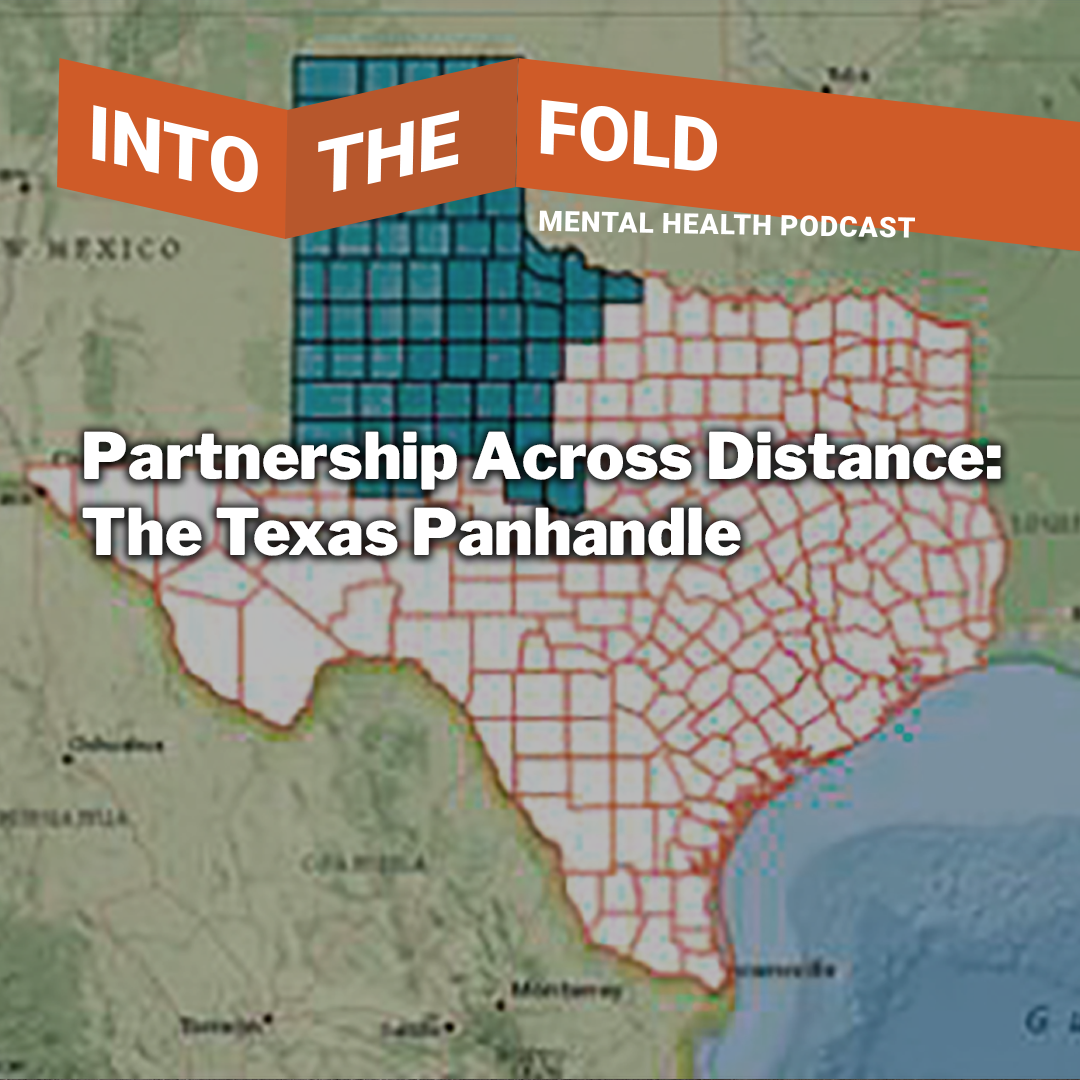
For those who may not be familiar with the Panhandle, we are essentially the square at the top of Texas. So it's 26 counties, that makes up nearly 26,000 miles. So it's a very large spread out area.
There's a hub in the center, which is Amarillo, a little over 200,000 population, but except for the two counties that are involved with the Amarillo area, all the other 24 counties are rural.
So it's a large area, spread out area, lots of drive time, lots of open space.
And so, as we know, with medical care, that can be a challenge.
We have some data that was gathered in 2022 by the Meadows Mental Health Policy Institute. Our regional center here in the panhandle told us that in this 26 county area there are about 320,000 adults.
And 23% of those have some kind of a mental health need.
And of those adults, 22% do not have health insurance.
So significant mental health needs, but also significant lack of funding to receive care for children in this area. Children and youth in. It was estimated about 80,000 children and youth in the area, 38% of those had some kind of mental health need and 11% had no health insurance to help cover those needs. So it's a large area, very spread out, and lots of mental health needs and challenges.
[00:05:55] Speaker E: Yeah. And then you add on top of that small communities and small populations that don't always have the resources to support a psychiatrist.
And so those families are left with deciding, you know, can we drive to amarillo? Is that 60 miles or 150 miles?
Does that mean I have to take off of work? Does my child have to leave school and miss a full day? And so, you know, they have to face a lot of questions of what, what do I have to sacrifice to get this care? And so rural mental health matters because, and I think Kathryn and I have talked about this a lot, mental health is health, but unfortunately our systems are not set up to address that in kind of a holistic approach. And so rural just faces very different challenges in your urban areas.
[00:06:52] Speaker D: I agree completely. I think we're also seeing, compared to 20 years ago, the stigma around mental health is not as large as it used to be.
But it's still there. And there was a recent campaign targeted toward farmers.
Lots of farming in the panhandle area of Texas, and lots of pressure on them to produce and avoid all the things that can wreck your crop.
And so just the knowledge that so many of our farmers and the workers are struggling with mental health, but that's a segment of our community that is very hesitant to reach out for assistance, to even speak about mental health challenges. And so the stigma is there all over Texas, but in the panhandle, some of our populations are even more hesitant to admit they have issues and seek help to address them.
[00:07:47] Speaker E: Yeah, that's a great point, Katherine. And I think if you think about a small rural town where everybody knows everybody, you know what the buildings are, that can be very intimidating to drive up if it were a designated clinic, because everybody would know what that purpose was. And so we have really done some interesting things with collaborative care within primary care settings for that reason, because also to reference that data that Katherine was talking about, what we know of the residents in the panhandle is 80% of them were mild to moderate symptoms, which really told us that we can address those in a primary care setting. We generally will have a primary care doc in a rural community, most of them.
And honestly, if we can address those early in mild to moderate, hopefully we can intervene at a really critical stage where they're not having to wait seven to eight to 10 years to receive critical serious care, that they are going to have to come to Amarillo and we may not have the beds.
They may have to go to Lubbock or Wichita Falls or wherever that might be.
It is important as a rural perspective to think about how do we right size the solution for the things that we do have in those communities.
It's also just really hard to keep our talent here because they want to go where there is infrastructure to support their career.
That's something that we're constantly talking about in the panhandle, especially with the new state hospital coming. So lots of challenges within the rural space.
[00:09:36] Speaker D: I think that provide the provider shortage is a really important thing to hone in on. And our 2022 data told us that two categories of providers, the first one, licensed behavioral health physicians in the panhandle. There are 31 of those individuals. And that means they each, if you allocate it out by the population, they each are responsible for serving 13,000 residents of the Texas panhandle.
And that compares statewide. The statewide number is more one to about 7,500.
And then if you look at licensed psychologists, there are 20 in the Texas Panhandle, which means their caseload, if everyone was served, would be 20,000 residents.
So I know statewide the challenge of having enough providers is crucial, but I think it's important to see what those numbers look like for us here in the Panhandle.
[00:10:34] Speaker C: Yeah. And how they're distributed. I mean, my guess would be there's the bulk of them are in the Amarillo area. There's certainly not going to be one per county so that people actually had immediate access to them.
[00:10:48] Speaker E: Right. Yeah.
And then I think we've made a lot of advances in telehealth, but telehealth is only as good as the. The broadband service you have in your region. And we have regions in the Panhandle that don't have reliable, affordable broadband. And so this is where some of our focus areas start to overlap, where it's hard to talk about one without the other, because it's one thing to have that available, but if you don't have reliable broadband, you don't have a safe space confidentiality that doesn't really do a whole lot for those communities. And so when we talk about that, broadband is not just a luxury, it is a priority and a necessity for things like this. And that's something we're definitely dealing with in the Panhandle regions. It's very expensive to lay fiber in the Panhandle.
So that's another just kind of intersection of why it matters to be talking about rural mental health.
[00:11:49] Speaker C: I like when we talk about broadband as a utility, because I do think it is in that framework. I mean, we're at a point where in order to get services to people, that is a key service that they actually need to have access to. And you're right, just getting it to the areas is so significantly expensive, not to mention having the infrastructure to have a space where people can either come.
Certainly it would be ideal if they were getting it to their own home, but even that is a whole nother layer that we can't guarantee at this point. So.
[00:12:33] Speaker E: Yeah, yeah.
[00:12:34] Speaker C: I just wanted to comment too, your comment about stigma.
We've heard that. I think that's so interesting, the distinction, you know, something that you don't deal with quite as much in suburban and urban areas is, oh, everybody knows what that building is, you know, so if something is labeled a certain way, there is a hesitation for people to want to seek that out. And I think one of the things that's been really useful, and it sounds like you all have certainly done this and Worked with this kind of thinking is to be as generic as possible so that everything is health related because people are much more open to being responsive to that. But then also to have integrated care where people are getting services connected and they don't have to go to different places in order to receive those services.
[00:13:32] Speaker E: Yeah. And it's also that warm handoff. So in our collaborative care model that we had done a three year grant with the Meadows Mental Health Policy Institute, one of those was in a rural area. So Moore county integrating that into their primary care and they are working to expand that. But it's about something Rick will talk about later, but that derivative and so like something that's not, you know, everyone's favorite part to talk about or is sexy. But you know, you gotta have strong workflows and billing and all of those things so that your office can continue to do that after our seed funding.
But primary care is such a great way to target individuals because that's where they're gonna go. And if you set them up and provide the doctors and the nurses and the everyone from the moment you walk in to the time you leave and have that community worker in who's then connecting the dots.
Cause it's real easy to get a piece of paper at the end that says, oh, it says I should do this. But somebody that's saying, oh, before you leave, we're gonna connect this dot here and then we're following up.
That is really life changing in a rural community where maybe we can't get a psychiatrist there, but we can connect them through primary care to the right resources. It's at least a step and it's at least talking about it, which I think is really, really, really critical.
[00:14:57] Speaker C: I think that follow up is crucial as well.
[00:14:59] Speaker E: Yeah, absolutely.
[00:15:01] Speaker B: Well, it's interesting because Tammy and I spent like an hour and a half today talking about workforce. It was for different projects, so. But totally related.
First off, we can't say, express how excited we are to be partnering with the two of you.
And I will tell you that we've been thinking about this for the last couple of years, ever since you hosted this funders meeting that we had with the Texas Rural funders. Tammy and I were there and we immediately started seeing like, opportunities. We're optimists. You know, I always look at the glasses half full. I acknowledge that it's half empty. Okay. So I'm not Pollyanna about it, but we just, we walked away and we said for the next iteration of wrc, kind of what we call our wellbeing rural communities. Our first cohort that we wanted to have a geographic footprint in the panhandle, something that we didn't have.
And now that we had some really strong relationships and partnerships through the Bivens and Amarillo Area foundation, we thought, okay, when we, you know, develop this next project, you know, we want to talk to you guys about it. And so we were just so, you know, excited to hear the receptivity and the trust that you, you, you placed in, you know, kind of the design work.
And so, again, you know, I think it, you know, you touched on a lot of the real kind of key challenges that rural communities face. You know, like when we zoom out and, you know, we're, you know, we're a statewide grant maker with smaller pockets, but, you know, we're talking about 254 counties, and we're talking about 200, and I think it's 58,000 square miles just over that.
So it does really, you know, kind of amplify the provider shortages, the issues of transportation. You know, it's like if many rural communities don't have public transportation and, you know, if you have to drive, you know, an out, you know, 100 miles or so to get to a provider.
And then, you know, we. You touched on this beautifully touched on the Sigma issue. So I think, you know, that's. That was one of the reasons several years back that we decided that we wanted to kind of make a real strong pivot to move our work and our grant making upstream.
And because, you know, we funded all kinds of stuff, you know, recovery and peer support and integrated care for well over a decade.
And we, we know that integrated care compared to treatment, as usual, you compare both of them, far superior outcomes, patient satisfaction, patient outcomes, people get better. Providers, you know, feel like they're really making a difference because they see that difference and it's less costly because then you don't have the, you know, emergency room and the law enforcement, which are in many areas, the de facto mental health provider.
So, you know, I think there's, you know, the opportunities are there that we have a lot of funders, whether they're governmental funders, private funders, who continue to fund, you know, innovations and workforce and, you know, innovations like integrated care. But thinking about how do we go upstream, because I'm also a realist, is that, you know, we've been talking for decades now that we meet or we need more doctors, more nurses, more psychologists, more psychiatrists, more social workers.
And then you fast forward and this is kind of decades, you can Go back in the literature, you know, it's, you know, they've been writing about this for decades. So today we still have the same thing. So our thinking has really evolved around how do we go upstream and how do we support communities that come together and define what are those conditions in their communities that contribute to poor health, poor mental health, and what assets, relationships, resources, liabilities, all those things that they possess that they could perhaps come up with some Ideas and Solutions vs. Rick and Tammy in our offices in Austin talking about what's best in Dalhart. We don't know what's best in our heart, but the people in Dalhart know what's best for them. And so, you know, we talk about this concept of trust based philanthropy, but it's really, you know, that it's really shifted our thinking and in terms of how do we provide funding as a platform for communities to come together. And that's why we're just really excited to be in partnership with the both of you.
So that way we can bring communities together and let them define what are those conditions, let them create the solutions and let them pilot test that and to really think about that creating that culture of, of mental health and well being and not to get swept down the river to, you know, down downstream where they will need, you know, kind of those crisis type, immediate and more intensive level of care.
[00:20:03] Speaker A: Okay, so thank you for all of those wonderful reflections, all of you.
So for this episode, I thought we would take turns at posing the questions.
And so I'm happy to hand this next one off to Laura and Catherine.
Just talk asking about the power of co funding. So why don't you two take it away.
[00:20:32] Speaker D: I love what Rick said about the passion and the focus of the Hogg foundation in Austin. And here Laura and I are based in Amarillo and we serve the Texas Panhandle.
And I think sometimes the stars align because the Amarillo Area foundation became involved with Texas Rural Funders and we followed a year after they did. And that's really how we. I had never heard of the HOG foundation before joining that organization. And so especially when Rick and Tammy, when Amarillo hosted a member meeting and Rick and Tammy came to Amarillo, we had a wonderful opportunity to get to know each other better, learn more about the respective foundations. And Rick and I even exchanged books because the Hogg foundation and the Bivens foundation were both started by women whose family wealth kind of came about in the same way. And it was fascinating to see how different parts of the state benefited from that philanthropy. So I Love that, because we were part of this statewide organization focused on rural issues.
When the Hogg foundation put out this.
This invite to participate in this. This mental health focus and in the two areas of Texas, Laura and I knew Rick and Tammy, we knew the foundation and for the Bivens foundation, when this opportunity came out and they indicated they were going to pick one site in the Panhandle to participate in the cohort. The Bivens foundation was in the middle of a grant cycle at that point, and we knew that we had more funding available than we had asks that had come in by the deadline.
And so we just decided, well, what if we use part of the funding we have to fund a second cohort?
And then Area foundation said, oh, my gosh, that's a great idea. We'll do a third cohort. And so I just love that by participating in a statewide organization and spending time outside of our office boxes, we were able to make this connection and then leverage the funds that we have here locally to do something even greater.
[00:22:46] Speaker E: I would ask Tammy and Rick, because Katherine and I have worked together on several projects, including our regional Meadows Institute Panhandle center with other funders. So I think collaboration is really kind of our secret sauce and in the Panhandle.
And so we've done this before, but would love to know what excited you guys about getting to partner with somebody from the Panhandle, because you could have easily just selected somebody, a site here, but you really were proactive in saying, hey, we could do this on our own, but we could also do this with Bivens and with Amarillo Area Foundation. What about that was exciting to you and like, just talk a little bit about that.
[00:23:34] Speaker B: Yeah, I mean, I. I'd love to start first, you know, again, we have not had a strong presence at all in the Panhandle. We've been wanting to do something in the Panhandle. And then to Catherine's point, once, you know, we. We met with you, I mean, we've known, you know, we've known Laura. Laura and I have known each other for a few years, but have never really, you know, collaborated, worked. But, you know, I think the. Just the relationship here that. The relationship we built over the course of time since that, since y' all hosted that meeting and hosted us there.
You know, we've stayed in touch, we talked and idea swapped and, you know, hey, what are you working on? And wow, okay. You know, this is what we're working on. And just, you know, and we've, you know, I think we just really developed this relationship based on mutual trust and respect. And, and it just seemed like it was a natural to reach out to you and say, hey, we've got this going on. We think this aligns with you, with your foundations.
Have a look at it. Give us your thoughts. And if this is something that you'd like to work with us on, we'd love to talk more about it. And that's kind of how it all started.
[00:24:47] Speaker C: I'd like to go back a little bit further. I think that one of the pieces of this that was really important to Rick and I both was related to when we started the well Being in Rural Communities initiative and realized as we got proposals, how few proposals we got from certain parts of the state.
And, you know, we recognize that right away we have a great co worker who likes to map things out for us. And so we can look at things graphically.
And we were able to see where there were these huge holes in terms of the.
What I was thinking of as the reach that we would have in terms of who. Who even knew that we had put this out right?
So when we. When we looked at that, Rick and I both thought, okay, this is an area where we've got some real opportunity for growth. Because, you know, the Hogg foundation has been around 85 years now.
We can look back at the history of the foundation and map out where we've had any kind of an impact, which is really neat to look at. But in all fairness, it's weighted very much in the urban areas because that's who's applied for the opportunities over the years. Now, that's not 100%. You know, I don't know an actual percentage, but I would say it's fairly low in terms of the amount of focus in rural areas prior to this initiative.
And so we felt like that was something that we needed to make a really intentional effort to figure out how to get into different areas where we didn't have that footprint. And so around the same time, the Texas Rural Funders was coming together and we ended up becoming part of that, which I think just to make sure that we give enough credit to that organization, I think think we've not only broadened our relationships through being part of that organization, but we've certainly broadened our knowledge base in terms of what we've learned about rural communities.
And there's multiple other ways that we've really intentionally done that too. But I think that was really a big first step for us, was just getting to a point where we were surrounding ourselves with Funders who. That's the work they do.
So here we're thinking, yeah, we'd like to play in this game. We'd like to be part of this and support this from a statewide perspective.
But we're not the go to people. We need to figure out, how do we get to those people? Because the other piece of this that I want to mention is I think one of the key messages that we wanted to get to our colleague funders was, even if we aren't partnering with, please get this out to your constituents, because you have that reach where we don't. And so I think, you know, this was really kind of a twofold thought. Number one, from an ideal perspective, we started talking about it, like, wouldn't it be great if we could partner with other funders to do this so that our money stretches further?
And I think, you know, that was really kind of this pie in the sky thinking, because, you know, timing may not line up, mission may not line up. I mean, there's so many other things that can come into play even if people are supportive of the work that you're doing.
So bare minimum, we were thinking, let's just encourage people to get this out so that people at least know it's happening.
And, and so I just wanted to highlight that because I think that alone was one of the very first pieces that was really important to us.
And then I would add going back to. To what Rick was saying, then we got the opportunity to go to Amarillo, and actually, I think the program that you all put together so that we got to experience being out in the communities and also learning about different issues that were happening in your specific areas, that was all really significant for us. And it really helped Rick and I in particular identify because, you know, there's certainly lots of different areas of Texas that have need, but I think really thinking about the Panhand and the Border as our two real focus areas and wanting to try to have as much of an impact as possible.
So by getting to go up there and spend time with you all and learn about your communities, then it felt like, oh, this is a natural fit. This would be so great. And I think we've kind of gotten the best of this with all three of us working together, because now we have this cohort of three organizations that I think in general, it's going to be really neat for them to have not only the learning community community with all of the sites, but they all. They have kind of their own little micro community.
So I think that's going to Be a really interesting thing for the evaluators and the learning team to support them with.
[00:30:11] Speaker E: It kind of makes me think of two things. And Catherine will relate to this. You know, we hear this pioneer spirit, right? The Panhandle, we're kind of just making things happen up here and no one's coming to save us, so we're going to figure this out.
And I think that's how the Panhandle came to be. And so when you think about our rural communities, there is a lack of capacity. And that's what I love about this program is because without thinking about their capacity in the community, buy in.
You know, they may not be able. They may not have somebody who knows how to write a grant or has the time or the ability or to manage that or to come up to the foundation and research in our foundation directory online to know, oh, who else funds this? And so I think that's what, you know, I know Katherine's team does this, my team does this. You know, when we know that there's opportunities for our partners in the community, we're sharing that because we know we also don't have the dollars to fund everything.
[00:31:15] Speaker C: Right.
[00:31:17] Speaker E: But that's why it's important to have all of us and to leverage statewide funders to come in and say, hey, we see you, we see you from Austin and we know what you're doing up there and we want to work with you and we want to expand your capacity and your reach. And so that's really exciting to me. And so I hear this from statewide funders a lot that, man, I never get any applicants from the Panhandle.
And so we're trying really, really hard to push those things out for them to know, no, you are, you are eligible and worthy to apply for this. Let's figure out how to do this. But there's a lack of capacity when they are just trying to get through the day, sometimes hard to stop and think about the other stuff that's important.
[00:32:01] Speaker C: Absolutely.
[00:32:02] Speaker D: That is so true. And I think as we think about having these three cohorts, but also looking forward to how can we apply what they learn over the next five years in other areas of the Panhandle, because our three cohorts, one's in the. In the northwest corner of the Panhandle, one is northeast and one is central.
And it's interesting how different the quadrants of the Panhandle are even just in that 20,000 square mile area. And so I love that we're going to hit different areas of the Panhandle and I think come up with different solutions and different action plans that then we can share not only with all the HOG cohorts, but our other residents throughout the Texas Panhandle and then they
[00:32:47] Speaker C: can become leaders for the other communities in your area, which is super exciting. Yeah, we're seeing that with some of the initial round of well being in rural communities. And actually this month one of our sites is going to be presenting to the new learning community.
So it's, it has this kind of pay it forward mentality behind it and really allows each of these communities to be strong in their own leadership. But then learn how to share that as well and hopefully share that with the other communities of the Panhandle. I just love that.
[00:33:30] Speaker A: Okay, so Tammy, you are next up.
So I know you've got some thoughts percolating, so if you don't mind just tossing it out into the conversation.
[00:33:49] Speaker C: One of the things that we've spent some time thinking about and really trying to learn from the communities that we've worked with is what does sustainability or durability look like in communities? And the way I think about that now, I won't say that it started off this way, but the way I think about that now is partnerships that our communities are focusing on and really trying to make relationships that allow them to continue the work that they've started. And kind of taking that backward, I think it's, it's really interesting because the establishment of partnerships is actually partially what brings different groups of people together. Different sectors and people that are can often be focused on very different goals.
And yet we say at the Hogg foundation, mental health is at the core of everything.
And so if you actually take that message and think about people's well being, it's fairly easy to make an argument that it is a positive thing for many different sectors to be involved in. And so as communities like to come together and try to get more buy in from different groups, these partnerships often will form.
It can help establish stronger relationships. And over time there can be this ability to, trying to think of the right word to use, almost entrench this into the infrastructure of each community.
And I think that has to be, that has to be really intentional.
So just to kind of think through, you know, as funders, obviously we are, we are funding for a period of time. We, as we mentioned before, we have a limited amount of money. We're trying really hard, all of us, to make as much of an impact with the amount of funds that we have to spread in whatever the geographic area is that we're responsible for.
And so we're always thinking about what happens after the grant, what happens when the money is no longer coming in.
I think as much as we might love to be able to fund indefinitely, we all know that that's not a possibility.
And a lot of times there's some real truth to there are certain things that really need to be built into the structure in order to stay available and present for the community.
And so, you know, I guess in general, I'm curious how you all think about when you're thinking about the timing of a project and when you're thinking about our goals for the end of the project and, you know, what do we really want to see toward the end?
How do you think about that in terms of sustainability for the people that you're going to be funding, the organizations that you're going to be funding?
[00:37:08] Speaker D: Laura and I have talked about in the past, I think we've, over the years we've both learned really important lessons about how crucial it is for, especially in rural communities for things to happen in a grassroots mindset that we, as we're the two big foundations, well, two of the three in the panhandle, and that we're not going in there and saying, this is what we think you need, this is what you think you should do. And so one thing that really appealed to me about your program and what these cohorts are going to experience is that they determine for their individual community what are the crucial points, what are the needs, what are their local resources that they can utilize and what does the plan look like for them.
And because this is over a five year period, I don't think they're going to feel rushed or stressed about having to come up in a one year period. Let's figure it all out.
And so the beauty of this is that there is time, there are coaching resources to help guide them along, but it's their individual conversations, it's their community conversations and not dictated by us as the foundations.
[00:38:23] Speaker E: And I think it is important that we preach this. Most foundations are like, oh, collaboration and who are you working with and what are you doing? And so really right now, what we're doing with this collaboration is kind of putting our money where our mouth was, right? We are also collaborating and that's important. It's at a different level.
But you know, you cannot work to address these big issues in silos, right. Because it creates duplication, it creates confusion. And there is a power in people coming together and just sitting in a room and learning what each other is doing.
And even if that is the. The agenda for that meeting is like, hey, I didn't know you were doing this, or I didn't know you had a van, and I've been needing a van for the last 10 years. There is power in just having a community come together, cross sectors, to sit in a room and talk about an issue. But I also appreciate the time these problems did not develop overnight. And so sometimes we feel the sense of urgency to like, oh, we got to check off these things, and this takes time. And it's going to evolve and we're going to take two steps forward and three back and then we're going to leap again. And that is okay. That's how these community collaborations work. And so I also appreciate that, that it is community driven, it is cross sector, and it is giving them the time to really do this, because we have some wonderful collaboratives in the Panhandle that have been working in kind of their frontier cities for years.
And part of one of these was born from that. And so had we said after a year or two years, man, they're not doing anything, we would have missed out on a lot of opportunities. So I think from a funder's perspective, we have to right size for a rural.
We cannot expect that, you know, our rural communities are going to have the same things that we have. Even in Amarillo and Canyon.
You know, a really simple example is we had a grant and their goal was to have an LPC that was going to be providing the services, and they can't get an LPC to come. And so they came back to us and said, well, here's our next option. And we said, great.
The end result is that those students are getting that service.
And so if we can't get the lpc, but you can get the licensed social worker, awesome.
Let's go for it.
And so as a funder really being willing to say, okay, maybe we can't get somebody in that small town, but we can get this and right size it for them. Because the end goal is for people to have better access and better care. And so.
[00:41:20] Speaker C: And to allow those plans to change, I think is. Is so significant.
[00:41:24] Speaker D: Yes.
[00:41:25] Speaker C: And I don't know that people are used to that, so I, I absolutely commend you for recognizing that. And I think that goes back to this idea that, that funders in general were prescribing things that might not work.
And so. And I'm not saying that's what you did, but I just. In general, I think there Were things put out there that, you know, people thought they were going to work because they had worked somewhere else, but then they brought them into a certain community and that was not what was going to happen.
And so I love that flexibility really. And that really is that self directed, self being the community, letting the community direct where things are going and what's going work for us.
[00:42:09] Speaker B: Building relationships, building partnerships and time and kind of that's been to, to me I see like the three legs of the stool as a visual, but it's, it's just, it takes time and you know, to really, to afford communities the opportunity to really institute some type of change.
You don't do that with a one year grant, you know, you don't do with the two year grant grant. You don't even do it with a three year grant. So I think, you know, what we learned from our first cohort is that, you know, five years is good. I mean, we think that's a real doable thing and giving them time to really form their partnerships, bring people together and to kind of create a shared vision. Because everybody's going to come with their own thinking, their own agenda, their own, you know, kind of relationships, networks, assets, what they have, what they possess, if they're an agency or they're an organization or they're faith based organization or a community member. But each person has all of this kind of stuff, right?
And I think what's really exciting, what we've seen over the course of years, funding this type of work, is seeing those relationships really kind of come to fruition and creating a shared vision of what can be, you know, community, mental health. What does that look like for our community and how do we get there? And people willing to make the kind of commitments and bring their assets and relationships and resources and networks and all of the things that they can bring to bear to be a part of something bigger than just themselves. And I kind of always go back in my kind of. My thing that I say is that no one, no one organization can do it by themselves. Whether you're a funder, whether you're a nonprofit, no one organization. So that really speaks to the power of relationships and partnerships.
[00:44:03] Speaker E: Yeah, I think a strong example, Katherine, you know, we started or funded a regional center, Meadows Institute, Panhandle. And originally, you know, they came to the Emerald Area foundation with this proposal.
And at that time when Clay Striveling was our CEO, I said, you know, Clay, this is bigger than us because mental health affects everybody. Even if it's a health foundation, mental health is A part of that. And so that's where we really felt it was important to. To have the big funders in our area come together, because mental health is kind of the cornerstone of all of that. And we knew it impacted the seniors that Katherine has a focus on and community health. And so, yeah, children, I mean, everybody. And so luckily, we do all play really nice and sandbox together.
And we have a really interesting. Because of our geography, I think, can do some of those really collaborative things. And so there's power in that. And it does send a message to the community that this is important. Important enough that this group came together to help address this issue. And so that's.
I think that's what's really exciting about this too, is that we can, again, keep furthering those collaborations.
[00:45:24] Speaker C: You know, Laura, I just love that you said that. And you said something similar a minute ago about these partnerships I hadn't put together. You know, we try really hard internally to live the way we are, encouraging our communities to. To function, which essentially is allowing the community to lead.
[00:45:51] Speaker D: Right.
[00:45:52] Speaker C: And allowing the community to make those decisions and identify their own issues and all of that.
And partnership has become such a key piece of that. I had not put it together that this was a really good way of modeling how important we think that is. And yet I completely agree with you. I think that's all of us kind of living our truth and saying that we do believe this is really important and we do believe there's power in these partnerships.
I might have to steal that. That's pretty fabulous. Take it away. Really great.
[00:46:28] Speaker D: And I think it's helpful, too, that I think part of the reason that we collaborate successfully is that we communicate on a regular basis.
There are about eight to 10 foundation CEOs from the Panhandle, and we meet for lunch every other month.
And then a lot of our grant program officers are starting to meet together and have coffee and talk about things. And so, number one, it helps keep the momentum going.
But it also.
Not just the larger foundations, but the smaller ones, it allows input from foundations all over the Panhandle so that we have the variety of experience and some run medical centers and others don't. So when I think about all the conversation we've had today and moving it forward and keeping it going, I think it's those interactions, but the communication, the continual communication among our local foundations between Hogg and Area and Bivens, and to me, that's what has allowed this to happen and is what will help make it successful.
[00:47:32] Speaker E: Agree, Katherine. Thank you.
[00:47:35] Speaker C: Yeah, I really like that.
[00:47:37] Speaker A: Okay, so I really would like to, you know, get y' all out of here because I know y' all are very, very busy.
I just was thinking that. And maybe this question is more for Laura and Catherine, although Rick and Tammy feel free to chime in as well, just regarding anything that your organizations may have on the horizon just in the coming months that you would just like for anyone listening to be aware of and where they can go to get more information about just the different things that, that you all are working on.
[00:48:23] Speaker E: You want me to go first? Katherine?
[00:48:25] Speaker D: You go right ahead.
[00:48:27] Speaker E: So we have quite a few different granting opportunities.
We have about 10 different cycles that run throughout the year. I will not try to recite all of those, but if you go to the amarilloareafoundation.org and you can go to grant Opportunities, we have a list of all of those grants when they open, when they close. I think the biggest thing for the Amarillo Area foundation that we try to express is please call us. So if you, if you've got an idea or a proposal, we want you to reach out to our grant officers so that they can help guide you and make sure that we are a fit for your organization. We never want people to try to stretch their program to fit into us. No, we will help direct you. If it's not for us, if it's more of a Bivens type proposal, we're going to send you to Bivens or some of the other funders. And so the biggest takeaway for the foundation is we want to get to know you, we want to partner with you. So please call our officers. You can click the contact now and it'll send them an email and they'll set up a zoom or a call.
But we've got lots of opportunities.
Our largest funding areas are in health, education and economic opportunity. And within health, we have food insecurity and mental health. But we have lots of different grants that range from 2,500 all the way up to whatever your program might need. So website is a great resource and reach out to our officers. They'd love to talk to you.
[00:49:53] Speaker D: Laura said it so well, I could almost say ditto for Bivens.
Our focus is seniors just enhancing quality of life for senior citizens. And so any project or grant request that involves seniors is always going to be high on our list.
So I would encourage you to go to bivinsfoundation.org that's B I V I N S Foundation.
And just like for Area foundation, you can see what our funding areas are, what we're focusing on, but our big focus right now is on senior hunger. And all of the foundations are kind of working together on hunger in general, but our focus is specifically seniors. And we've created a website. It's seniorhungersolutions.org and if you go to that website, there's data about how many hungry seniors are in each county and what resources exist in each county. And so this is something we'll continue to develop. We'll work with the other foundations, but our big, hairy, audacious goal is to find solutions for availability, affordability of healthy food for seniors and everyone across the Texas Panhandle.
[00:51:02] Speaker B: Yeah. That's awesome.
[00:51:04] Speaker C: That is awesome. You all are both so inspiring. And I walked away from Amarillo feeling so connected to your communities, but also just all that we learned from you all, and I. I walk away from this conversation feeling inspired also. So it's. It's reminiscent.
[00:51:28] Speaker E: Thank you, Tammy. Same here. We love when we get to collaborate with you guys. See you at Beatings. Just saw Rick and South Padre a couple weeks ago and learned so much from that meeting.
And I know Catherine and I will welcome you guys anytime to the Panhandle.
[00:51:45] Speaker C: We definitely want to come back.
[00:51:48] Speaker A: Okay. So wonderful.
Laura, Catherine, Tammy, Rick, just thank you so much for taking the time to have such a rich conversation. I know there's so many just different angles from which anybody can come at this.
And so in about 45 minutes, y' all did a wonderful job. So thank you very much.
[00:52:18] Speaker B: Thank you, Ike.
[00:52:19] Speaker D: Thanks for hosting.
[00:52:21] Speaker A: Yes, you're welcome.
As we wrap up, a quick reminder that this episode is part of our new season theme, Growing Capacity for Change.
Across four arcs. Community, partnership, policy and research, innovation and education.
We're exploring how people all across Texas are growing their capacity toward a better, more lasting mental health landscape.
If you missed the first arc of episodes, Community, it is in our back catalog, and I hope you take the time to check it out for your listening enjoyment. Here are some snippets from those three conversations.
[00:53:13] Speaker D: So we aren't mental health professionals, but we do see the trauma that affects or affected the people who were involved in this flood.
It. It caused lifechanging alterations and fear.
You know, they lost everything, so they didn't know what their next steps were going to be. And. And frankly, they were just in shock.
[00:53:42] Speaker C: For me, research that is inclusive for
[00:53:47] Speaker E: disability is also about healing.
Research affects huge parts of our lives.
[00:53:53] Speaker C: Healthcare, education, services, support.
But disabled people haven't always been involved in shaping it. And there's still massive room for improvement
[00:54:04] Speaker D: there, and that can take a toll
[00:54:07] Speaker C: on people's mental health, especially if they've
[00:54:10] Speaker D: spent years feeling misunderstood or spoken about.
[00:54:14] Speaker B: And to think about the ways in which trust in the government has largely been eroded in this era. The government which we pay into should be providing beneficial, supportive services to people in the US and across the globe. We're discussing the heartbreaking reality that millions of people are about to face exorbitant health costs meeting them. And it's a long history. And in this moment in 2025, we're contending in our work in coalition with a fight for the dignity of all people. Yes, but with this erasure of history.
[00:54:52] Speaker A: If you haven't already, check out our previous episodes this season and follow along as we continue to tell stories that connect and inspire.
And that does it for this episode. We're glad you could join us. Production assistance by Cheyenne Salazar, Kate Rooney and Daryl Wiggins. And thanks as always to the Hogg foundation for its support. If you have comments or anything you would like to share about the podcast, feel free to reach out to us at into the foldustin utexas.edu.
especially thoughtful comments will be acknowledged during a future episode.
Your My Our Mental Health Matters. Please leave us a review and subscribe to us on your preferred podcast platform platform. And don't forget to check the show notes for related content, including past episodes.
Transition Music by Antoni Rajakov Taking us out now is Anna's Good Vibes by our good friend Anna Harris. Thanks for joining us,
[00:56:01] Speaker C: Sam.